
CRHEATE: Leading an in-house agency model inside a university with Kelly Hiller

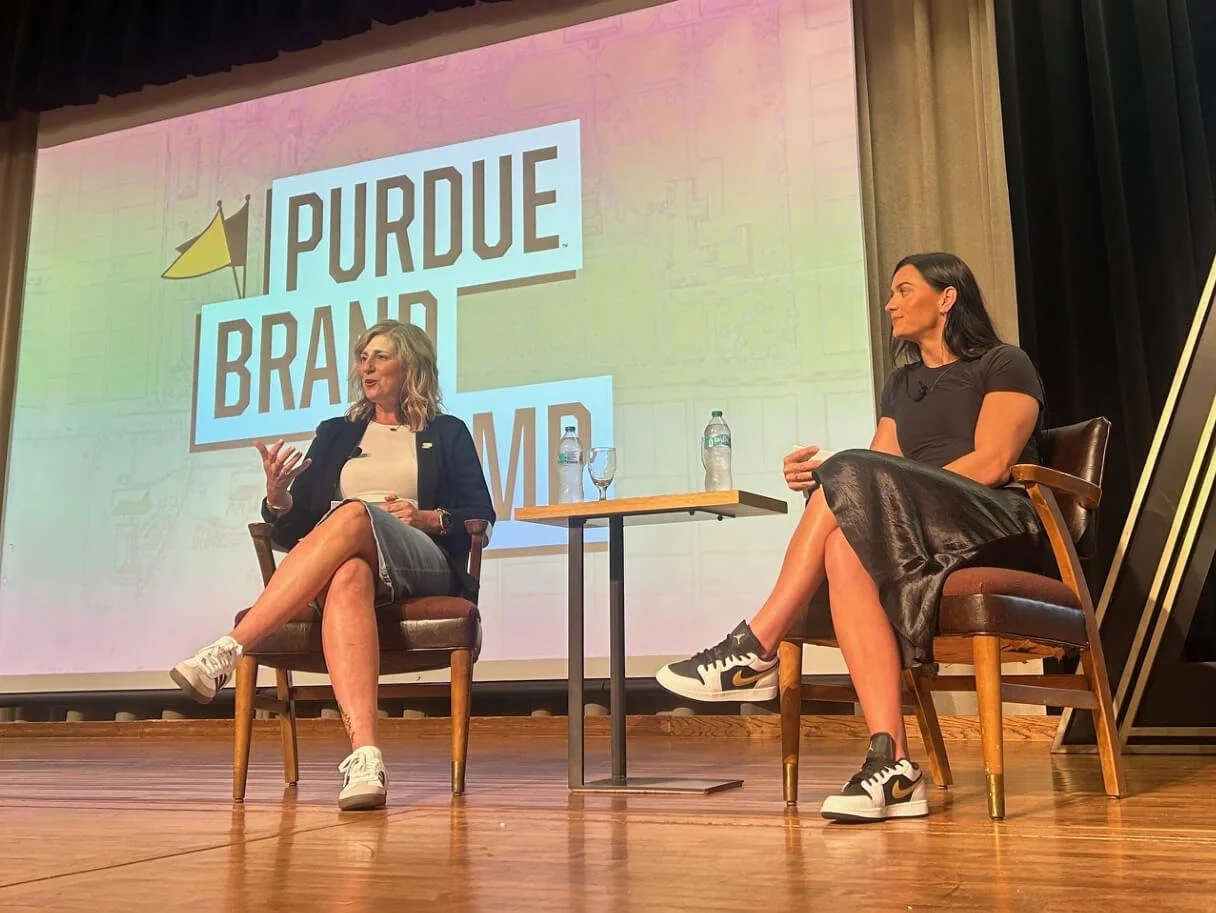
Kelly Hiller leads Purdue University Brand Studio, a centrally funded, full-service in-house agency responsible for shaping how the university presents itself to the world.
The team brings together brand, strategy and creative disciplines under one model, reflecting standards more commonly found in agencies and major commercial organisations.
In this second conversation, our focus shifts from the creative work itself to the structure that makes it possible.
What does it actually take to run an in-house agency inside a large, complex institution?And why do so many attempts fall short?
Kelly’s perspective offers a clear answer: it is not about naming a team differently, but about changing the economics, expectations and boundaries that define how that team operates.
The phrase “in-house agency” gets used a lot in higher education, usually with good intentions. But changing the name on the door doesn't always change how the team operates.
The same requests still arrive, the same competing priorities still shape the agenda, and many teams find themselves caught between delivering work and directing it. Things get done, deadlines get met, but beneath the surface, the operating model often remains much the same.
What Kelly describes at Purdue is something far more significant than a rebrand of the org chart. It is a redesign of the operating model itself. And interestingly, the turning point wasn’t creative. It was financial.
“We had essentially been a recharge unit,” Kelly explains, describing how the central team previously had to sustain itself by taking on internal requests from across the university. “You’re kind of at the mercy of whoever has budget and whoever wants to engage.”
I’m sure that model will sound painfully familiar to many people working in higher education marketing. It's also the reason so many central teams struggle to become genuinely strategic. Because if your funding depends on saying yes to the work, then saying no is never really an option. You’re not operating as an agency; you’re operating as a production unit.
And the whole recharge model is an industry in itself, often limiting creativity and experimentation and making it harder to prioritise high-impact creative work as the process becomes more task-driven.
The shift came when Purdue’s leadership decided they wanted something different and were prepared to back it structurally. Moving to a centrally funded model changed the dynamic immediately. The team no longer had to chase internal demand to justify its existence. Instead, it could focus on enterprise priorities and higher-value brand work.
Kelly describes the change very simply: “Now we can focus on the work that’s really going to move the institution forward.”
That single decision changes almost everything that follows.
Of course, once you are no longer forced to take everything on, another challenge emerges immediately.
Choice.
Or more specifically, what you stop doing.
This is the point where many institutions lose momentum. Everyone wants the new model in theory. Fewer people are comfortable with the consequences of it in practice.
To her credit, Kelly is very direct about this.
“We had the autonomy to make that call.” She says at one point in the conversation, “We just had to make some hard decisions to make, re-evaluating resources and reallocating them to be more strategically effective. We’ve put clearer prioritisation frameworks in place so we can focus on enterprise campaigns and high-impact work, rather than trying to say yes to everything.”
This is a serious point.
Universities accumulate legacy outputs over decades. Publications, formats, workflows and channels that survive partly because they always have, partly because someone senior still likes them, and partly because no one wants the political discomfort of questioning whether they still justify the time and resource they consume.
But an in-house agency cannot become strategically valuable if most of its energy is tied up maintaining inherited production requirements.
Something has to give. And this is where Purdue starts to resemble the kind of commercially mature organisations universities often claim they want to emulate.
Because the strongest in-house studios inside brands like Unilever (U Studio & Sketch Pro – both developed with agency partners), Airbnb (Samara, a multidisciplinary innovation and design studio) and Google (Google Brand Studio and Google Zoo operate for the organisation and clients respectively) are not successful simply because they make good creative work. They succeed because the organisation has decided that creative capability is strategic infrastructure rather than an overflow resource.
That distinction matters enormously.

Unilever’s internal studios now operate at a global scale because they are treated as a core capability. Airbnb has spoken openly about the advantages of keeping creative leadership close to decision-making so ideas can move “quickly and without compromise”. Google’s internal creative ecosystem increasingly behaves less like a marketing department and more like an R&D environment for brand experimentation. Two of the most inspirational people in my career showed me how this worked when they were at the heart of it.
Three very different organisations, but the same principle. When creative capability sits closer to strategy, it behaves differently.
Purdue appears to understand that instinctively.
What makes the model particularly interesting, however, is that it does not default to centralisation.
This is not a story about pulling every marketing decision into one office.
In fact, Kelly repeatedly emphasises the opposite.
Schools and units still run their own marketing activity. They still tell their own stories. But the centre provides the infrastructure that allows them to do that work more effectively and more consistently: templates, tools, training, content packages, B-roll, systems, frameworks and regular communication rhythms through initiatives like Brand Camp and the Purdue Brand Network.
Kelly describes it perfectly:
“Everybody’s in charge of their own house, but we live in the same neighbourhood.”
That may be the defining sentence in the entire conversation.
Because it captures something many universities struggle to balance: coherence without control. The central team is not there to own every output. It is there to create alignment, raise standards and concentrate expertise where it has the greatest institutional value.
“We want to equip people,” Kelly explains, “Not create dependency.”
That’s how strong commercial brand teams tend to work. The centre doesn’t hoard capability. It distributes it.
But none of this works without leadership trust.
And for Kelly, trust isn’t built through creative enthusiasm alone. It’s built through clarity, consistency and reporting.
“There’s a rhythm to it,” she says. “You have to follow up with results. You have to share that back.”
There’s a strikingly pragmatic thread running underneath everything Purdue Brand Studio does. Kelly talks repeatedly about transparency with leadership,“We’ve built a consistent rhythm of sharing results back with leadership through our Brand Health Scorecard, regular cabinet updates, and campaign reporting. That visibility helps connect the work to outcomes and builds confidence over time.”
Or, as she puts it, “marketing the marketing.”
That phrase matters because ambitious internal creative models often fail for cultural, not creative reasons. Leaders don’t always understand what they are being asked to trust or invest in. Particularly in universities, where institutional culture tends to favour certainty, process and precedent over experimentation.
So the internal storytelling matters as much as the external storytelling.
In fact, possibly more.
The hardest part of the transition, however, is not structural.
It’s human.
Changing the shape of the work inevitably changes the shape of the team required to deliver it. Kelly is candid about this, too. If you move away from long-form print outputs and traditional campaigns towards cultural moments, integrated brand experiences, social storytelling, paid media and agile creative production, then different skills become more valuable.
“The same structure that you’re in now may not serve you two years from now,” she says. “You have to constantly evaluate where the gaps are.”
That line lands because it applies far beyond Purdue.
Most universities are still trying to operate modern brand systems on structures designed for an earlier communications era. And while the market around them has changed dramatically, many institutions are still hoping incremental adjustments will be enough.
Purdue’s example suggests otherwise.
The real shift happens when structure, funding, leadership expectations and creative ambition all move together.
Which brings us back to the phrase “in-house agency”.
Because the more you listen to Kelly describe Purdue Brand Studio, the clearer it becomes that the title matters less than how the model actually operates.
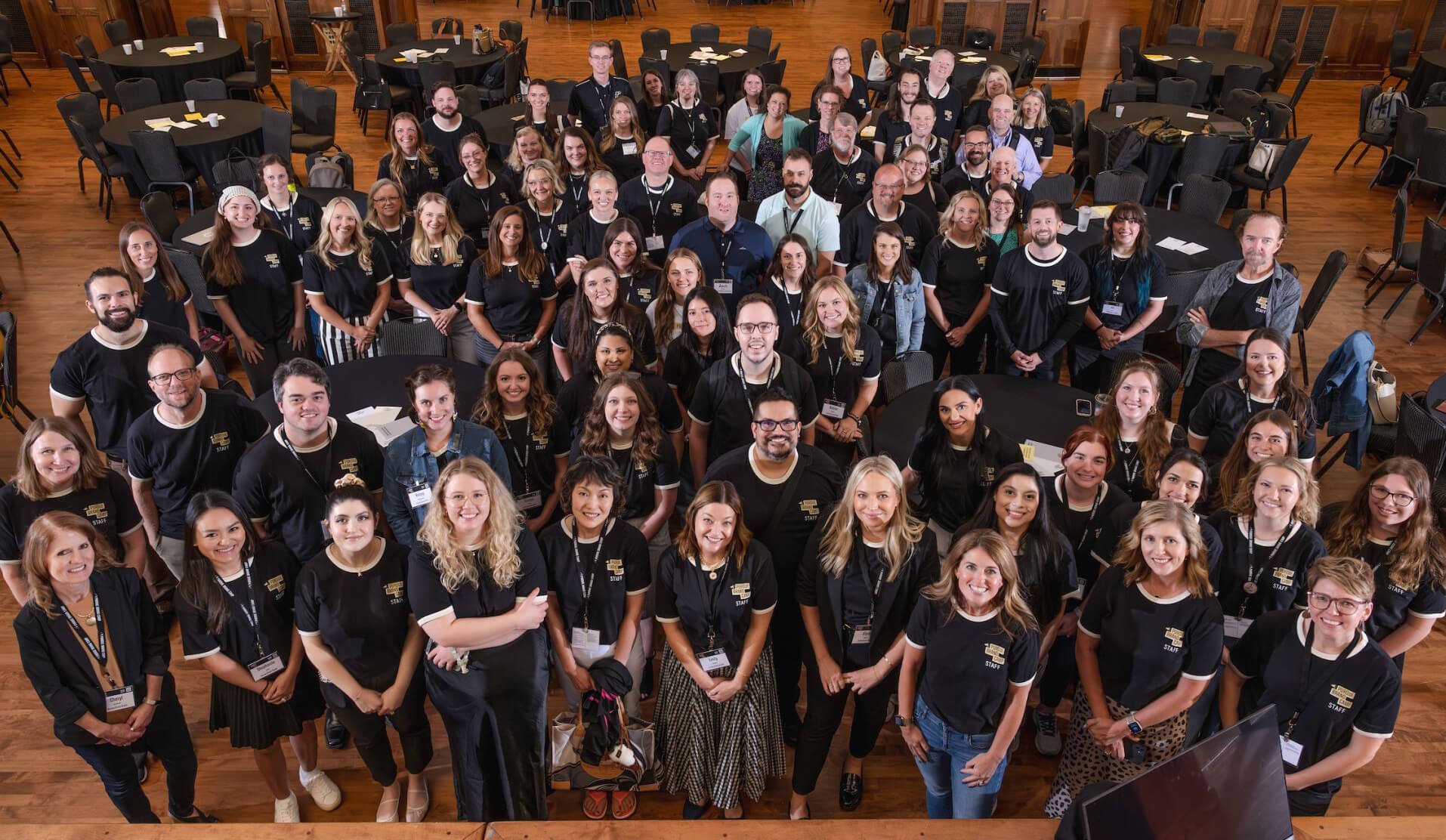
Purdue Brand Camp
An in-house agency is not defined by where people sit. It's defined by whether the organisation has given that team permission to prioritise, to specialise, refuse certain work, and focus on enterprise value over internal demand.
Without those conditions, the model remains largely cosmetic.
With them, something much more interesting becomes possible. Not a service department with better branding, but a strategic creative capability embedded inside the institution itself.
And perhaps that’s the real lesson here.
The strongest universities of the next decade won’t be the ones producing the most content. They’ll be the ones building the clearest systems for deciding what is worth making in the first place.
As Kelly puts it: “You can’t do everything for everybody and still do your best work.”
21st-century universities need to lay the foundations to unleash creativity as a superpower in an increasingly competitive sector, one that’s not just competing with other institutions but other choices altogether.
Purdue Brand Studio offers one concrete example for how this can be achieved.
Three take-outs
You can’t behave strategically if your funding model forces you to behave like a supplier.
The shift from service team to agency model begins with a choice – what to stop doing.
Strong in-house studios create institutional capability, not institutional dependency.