

Making the institution make sense
As Chief Marketing Officer at Purdue University, Kelly Hiller sits at the intersection of leadership, strategy and creative execution. Her role extends far beyond campaigns and communications, helping the institution translate its ambitions into stories, experiences and relationships that audiences can understand and act upon.
In this final conversation, we explore a less visible but arguably more important aspect of modern university marketing: the CMO as translator. Someone who can bridge executive priorities, academic expertise and creative capability, helping leadership understand the value of brand while helping marketers understand the challenges the institution is trying to solve.
The most powerful thing Kelly says during our conversation isn't about a campaign.
It's about the job itself.
"I think the first thing is being a really good listener."
Not a storyteller, a strategist, or a creative leader. A listener.
It's a deceptively simple answer, but the more I reflected on it afterwards, the more important it seemed.
Because most universities are extraordinarily complex organisations, they're full of expertise, competing priorities, strong opinions, deeply held beliefs and long-term ambitions. Leadership teams are often dominated by academics who have spent decades becoming world-class experts in their fields. Unsurprisingly, most are not experts in brand building, consumer psychology or marketing effectiveness. Nor should they be.
The challenge for a modern CMO is not to expect institutional leaders to become marketers. It’s to help the institution make better decisions, build stronger relationships and realise its ambitions. Translation is how that happens.
The CMO sits at the intersection of leadership, audiences and markets, connecting institutional priorities with external realities and identifying opportunities others may not yet see.
Kelly describes listening closely to the priorities of the President and leadership team, paying attention to recurring themes and institutional concerns, and then asking a simple question:
"Where can marketing actually influence this?"
That question feels obvious, yet many marketing teams are still brought into conversations too late. A strategic decision is made. A direction is agreed. A challenge is identified. And then marketing is invited in to communicate it.
Kelly describes something different. Marketing starts earlier. It listens before it writes. It notices before it briefs. It identifies opportunities where storytelling, brand building and creativity might help solve institutional challenges rather than simply publicise them.
One example from our conversation brings this into sharp focus.
“Nobody asked for it”. That detail matters.
Purdue had identified a growing concern around research funding and corporate partnerships. At the same time, the university had a genuine strength: meaningful collaborations with organisations like Rolls-Royce, Lilly and Wabash.
The challenge wasn't the work; it was visibility.
"We wanted to show that this collaboration is authentic,"Kelly explains."Like they do in real life."
So the team built a campaign around those relationships, showing students, faculty and industry partners working together to solve real problems. What followed is perhaps my favourite moment from the conversation.
Kelly recalls the President saying: "I didn't even ask for this." Her response? "That's our job."
It's such a revealing exchange because it reframes marketing entirely. Not as a department waiting for instructions, but as a function helping the institution solve problems it may not yet have fully articulated.
The more I think about this, the more convinced I am that translation is perhaps the most underdeveloped capability in higher education leadership.
Universities are exceptionally good at creating knowledge.
They are often much less effective at creating understanding.
Research is translated into journal articles, policy papers, technical reports and grant applications. All perfectly appropriate, but often the wider meaning gets lost somewhere along the way. The significance remains trapped inside specialist language. The impact remains visible only to those closest to it. The public sees outputs rather than outcomes, activity rather than meaning.
This is where marketing can create extraordinary value, not by simplifying the work, but by making it legible.
The strongest commercial brands have understood this for years.
IBM's Smarter Planet* initiative wasn't simply a campaign about technology. It was an attempt to make an enormously complex organisation understandable through a single organising idea. IBM transformed a sprawling collection of products, services and capabilities into a story that leaders could grasp and act upon by using design to bring focus to resource efficiency, economic growth, and sustainable development through data analytics and sensors. Creative work translating complex technologies to cut through to a wider audience.
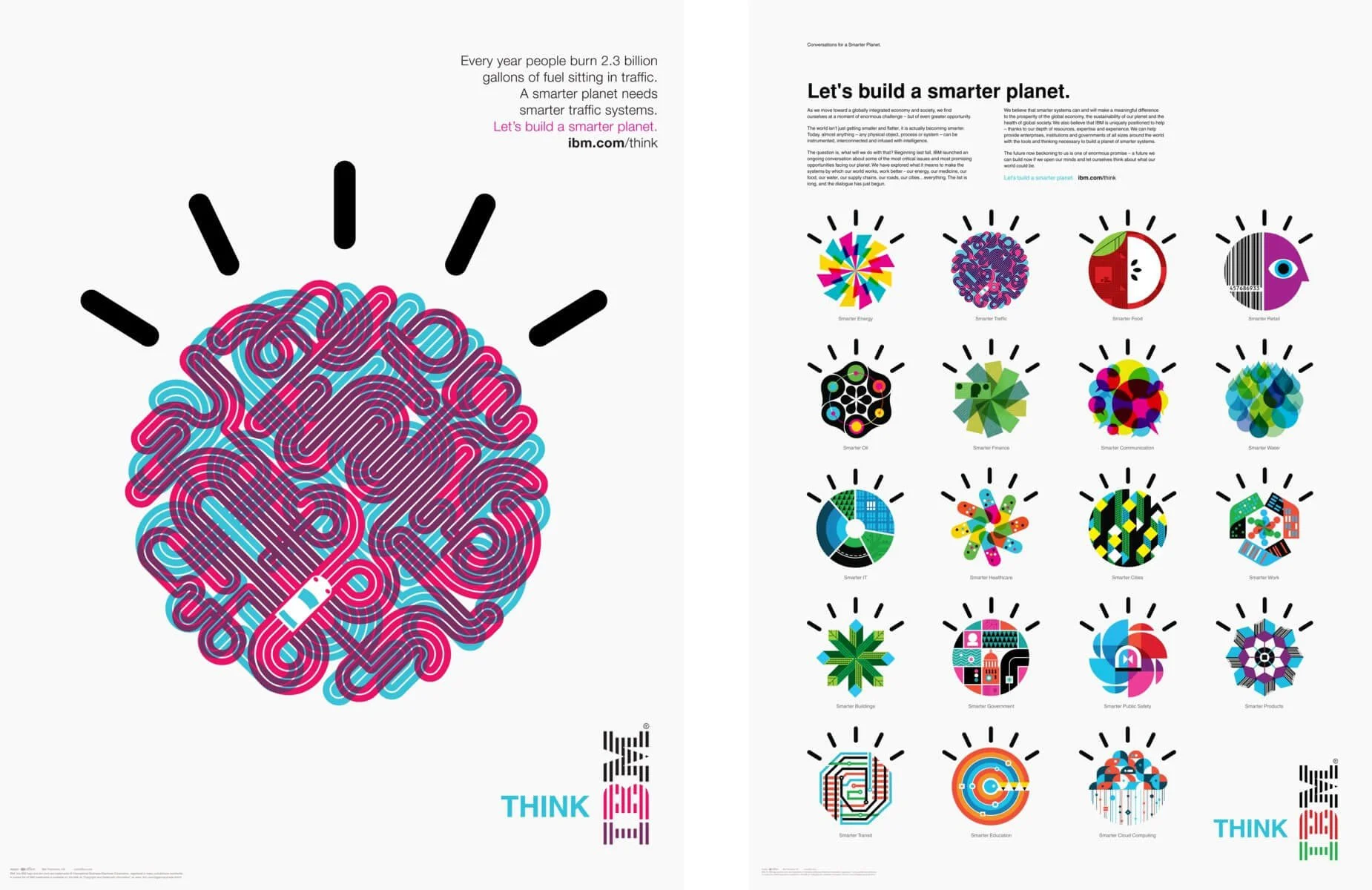
*The distinctive creative work was produced by The Martin Agency: CCO Jerry Hoak

Patagonia has done something similar with sustainability.

Microsoft has done it through accessibility.

GE has done it through engineering. Different sectors, different challenges, but the same discipline: taking something technically sophisticated and making it meaningful without stripping away its substance.Make it stand out
Universities face exactly the same challenge.
But translation works in both directions, and this is the part of the role that often gets overlooked. The CMO isn't simply translating the institution to the outside world. They're translating the outside world back into the institution.
Kelly talks about perception research and benchmarking work that revealed some uncomfortable truths about how external audiences viewed Purdue. Not because the university lacked substance, but because perception had not kept pace with reality.
That's valuable information. Perhaps more valuable than any campaign, because it allows leadership to see the institution through the eyes of those they are trying to influence: students, partners, funders, employers and government.
Translation, in this sense, becomes evidence.
It also becomes advocacy.
Marketing the marketing
One of the things that struck me throughout our conversation was how much of Kelly's role involves helping leadership understand marketing itself – not campaigns or communications, but marketing as a strategic discipline.
This resonated with me because it reflects the reality of most universities. Outstanding academics and institutional leaders rightly populate executive teams. They've spent decades becoming experts in research, teaching and governance – not in brand building, consumer psychology or marketing effectiveness.
That means one of the CMO's most important responsibilities becomes educational. Not in a patronising sense, but in helping leadership understand what modern marketing can contribute to institutional success.
Kelly talks about transparency through regular reporting, explaining investment decisions and sharing outcomes. Or, as she puts it: "Marketing the marketing."
I suspect many university marketers will recognise that challenge. Helping people understand why brand matters. Why awareness matters. Why consistency matters. Why emotional connection matters. And why creativity is not an indulgence but an accelerator.
This isn't about winning arguments; it's about building confidence. And confidence creates permission. Permission to invest, to experiment and, occasionally, to take creative risks.
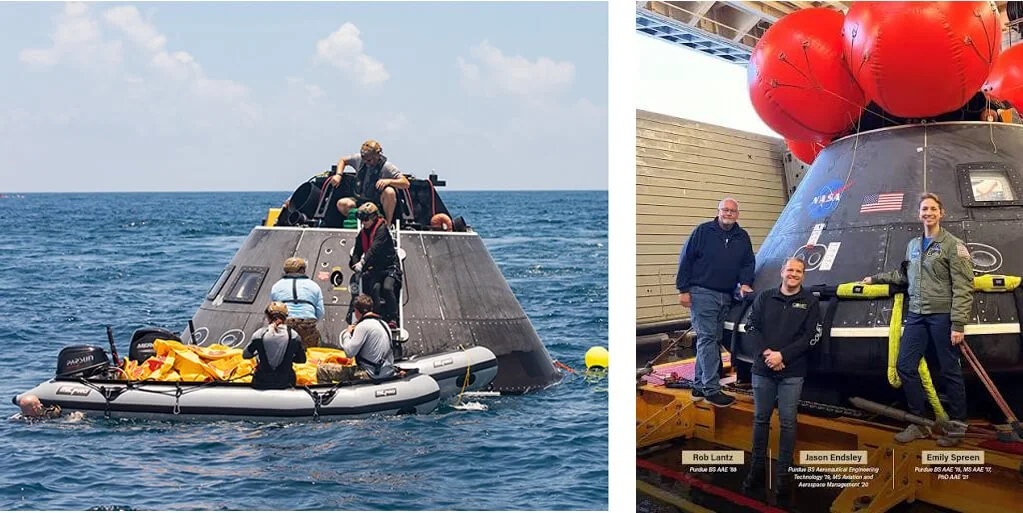
The Artemis example illustrates this perfectly.
When Purdue identified that three alumni were involved in the Artemis mission recovery effort, the team mobilised quickly. Content was created, media opportunities were pursued and results were shared. The moment was captured while it still mattered.
"We need to move at the speed of business, not at the speed of academia," Kelly says.
It's a line that stayed with me. Not because it criticises academia, but because it recognises that attention has a shelf life.
Translation like this only works if it happens while people are still listening.
Perhaps that's the deeper lesson from this conversation.
The CMO's role is not to sit at the end of the process and package decisions that have already been made. It's to sit closer to the centre, listening, interpreting and connecting:
Helping leadership understand audiences
Helping audiences understand the institution
Helping creative teams understand strategic priorities
And helping leadership understand why creativity matters in the first place.
Because when that translation is working properly, marketing stops being a communications function. It becomes an institutional capability.
Increasingly, I suspect that's where the most effective university CMOs will create their value – by connecting dots others don't see.
They help leaders understand audiences.
They help audiences understand institutions.
They help creative teams focus on strategic priorities.
And increasingly, they help institutions recognise opportunities before those opportunities become obvious.
That's why the role is much larger than communications. It is part strategist, part translator, part educator and part catalyst for change.
Listening is where it starts.
But helping the institution move forward is where it matters most.
Three take-outs
The CMO's most valuable role may be translation rather than communication.
Great marketing doesn't just explain the institution to the world; it helps the institution understand itself.
Confidence in brand and creativity is rarely built through persuasion alone. It is built through evidence, education and trust.